
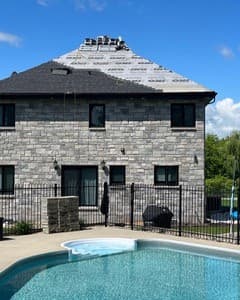
Roof Ventilation
Maximum vents, turbines and ridge vents for optimal attic ventilation.
Proper attic ventilation is essential to prevent ice dams, condensation, deck rot and mould growth. We install and balance all types of vents to ensure optimal airflow, winter and summer.
Problems we solve
- Humidity or ice buildup in the attic during winter.
- Excess heat on the second floor in summer, degrading shingles and structure.
- Ice dams, mildew or rusty nails visible in the attic.
- Mixed vent models (ridge, soffit, gable) short-circuiting the ventilation.
- Manufacturer warranty conditional on ventilation meeting spec.
A well-ventilated attic lasts twice as long
Attic ventilation is the most underrated factor in roof lifespan. A poorly-ventilated attic traps moisture in winter (which wrecks insulation and rots decking) and heat in summer (which ages shingles prematurely). Either way, the brand-new roof you just installed can lose ten years of useful life in just a few seasons.
The principle is simple: air has to enter through the soffits at the bottom of the roof and exit at the top, either through a ridge vent, static vents (Maximum boxes, turtle vents), or turbines. That continuous air movement carries away the moisture and heat that would otherwise build up.
A system, not isolated parts
Ventilation isn't about installing more vents — it's about balance. A roof with lots of exit vents but blocked soffits doesn't ventilate properly, no matter how many vents you add. Likewise, clear soffits without adequate exit create a stagnant chamber where hot, humid air sits.
We calculate the net free area (NFA) required for your attic per the rules (1/300 of the attic floor for balanced ventilation), then size the intakes and exhausts to hit that ratio. It's science, not guesswork.
We also check whether your existing soffits are blocked by insulation overflow — an extremely common problem in attics that were insulated without installing baffles.
The signs of bad ventilation
Several signs can point to bad attic ventilation. In winter: huge icicles at the eavestroughs, ice dams, frost on nails poking through the decking, visible moisture on the insulation. In summer: an abnormally hot upper floor, shingles that seem to age faster on certain roof sections.
If you see one or more of these signs, don't wait. Bad ventilation causes cumulative damage: every winter and every summer, your roof and insulation degrade a little more. Fixing the problem fast saves a lot of money in future repairs.
Our interventions range from adding a few extra vents to a complete redesign of an attic's ventilation system. We always pick the simplest, least invasive solution that'll fix the problem for good.
Why choose Toitures Boulet
- Precise 1/300 intake/exhaust ratio calculation required by Building Code.
- Consistent installation: vented soffits + continuous ridge vent — never a conflicting mix.
- Fix thermal bridges along the way — ventilation and insulation go together.
- Workmanship warranty and demonstrable compliance for shingle warranties.
Our process
From your first call to the final warranty — clear, transparent, no surprises.
- 1
Contact & on-site inspection
We respond to your request within 24 business hours and schedule a free on-site visit to assess your roof and understand your goals.
- 2
Written, itemized estimate
You receive a clear, line-by-line estimate with no hidden fees. It remains valid for 90 days and covers materials, labour, and applicable warranties.
- 3
Project scheduling
Once the estimate is approved, we agree on an approximate date and order materials. We confirm the exact date closer to the work based on weather and current scheduling.
- 4
Professional execution
Our crews work methodically and safely, protect your property with tarps and plywood, and stick to the agreed timeline.
- 5
Cleanup, final inspection & warranty
We sweep every nail with a magnet, do a final walkthrough with you, and issue your warranty documents. Your project is fully complete.
What's included
FAQ
What are signs of poor attic ventilation?+
Ice dams in winter, condensation on the deck, mould, wet insulation, or excessive upstairs temperatures in summer.