
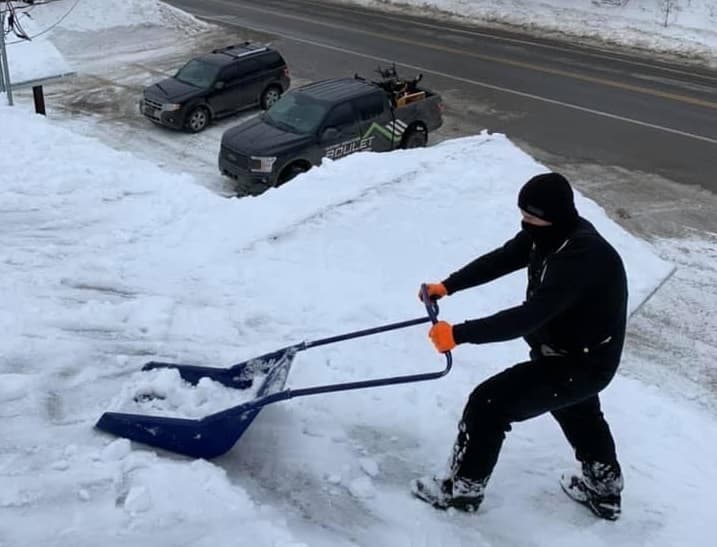
Ice Dam Removal
Safe ice dam removal and long-term prevention solutions.
Ice dams cause expensive water damage every winter in our region. Our team uses low-pressure steam to remove them without damaging your roof, and we also offer lasting preventive solutions: ventilation, insulation and heat cables.
Problems we solve
- Thick icicles hanging along the roof — obvious sign of ice dams.
- Interior water infiltrations appearing only during winter thaws.
- Ice built up in gutters causing overflow and backflow.
- Recurring dams year after year despite attempted fixes.
- Need for emergency intervention before water causes major damage.
Where do ice dams come from?
An ice dam forms when heat escaping from your home melts snow at the top of the roof. That meltwater flows down, hits the edge of the roof (which is colder because it overhangs outside air), and refreezes. Cycle after cycle, an ice dam builds up and eventually blocks normal water runoff.
The problem is that the water pooling behind the dam starts working its way back up under the shingles by capillary action — and from there, it quickly finds its way to your ceiling. It's one of the most common causes of winter leaks in Quebec homes.
Steam removal: the only safe method
Removing an ice dam takes care. Breaking the ice with a hammer or hatchet will almost certainly damage the shingles underneath, and you'll have a bigger problem come spring. That's false economy.
The right method, the one we use, is low-pressure steam. A machine heats water to roughly 200°F and projects it as steam directly onto the ice, which melts progressively and drains in a controlled way. No mechanical impact, no damage to the roof, and the result is clean.
Depending on the ice volume, an intervention can take a few hours to a full day. We work as a team to speed up the process and keep things safe on the roof.
Prevention: the best cure
Removing an ice dam treats the symptom. The real fix is prevention — and it comes down to two factors: attic insulation and roof ventilation. A well-insulated attic loses little heat, so the snow on top doesn't melt. Good ventilation exhausts residual heat before it can melt snow.
In homes where both those elements are deficient, ice dams come back year after year no matter how many times you have them removed. We offer a complete diagnostic to identify the specific causes in your home and an action plan to fix them for good.
In some special cases (complex roofs with deep valleys, original additions with bad design), installing heat cables at the eaves can complement insulation and ventilation as an additional solution.
Why choose Toitures Boulet
- Low-pressure steam removal: the only method that doesn't damage shingles.
- Root-cause diagnosis: often a mix of insufficient insulation and failing ventilation — we can fix both.
- Fast intervention to stop damage, then a long-term plan to prevent recurrence.
- Photo documentation for your insurance file if interior damage is covered.
Our process
From your first call to the final warranty — clear, transparent, no surprises.
- 1
Contact & on-site inspection
We respond to your request within 24 business hours and schedule a free on-site visit to assess your roof and understand your goals.
- 2
Written, itemized estimate
You receive a clear, line-by-line estimate with no hidden fees. It remains valid for 90 days and covers materials, labour, and applicable warranties.
- 3
Project scheduling
Once the estimate is approved, we agree on an approximate date and order materials. We confirm the exact date closer to the work based on weather and current scheduling.
- 4
Professional execution
Our crews work methodically and safely, protect your property with tarps and plywood, and stick to the agreed timeline.
- 5
Cleanup, final inspection & warranty
We sweep every nail with a magnet, do a final walkthrough with you, and issue your warranty documents. Your project is fully complete.
What's included
FAQ
How can I prevent ice dams from forming?+
A good combination of attic insulation and ventilation solves the problem at the source. Heat cables offer a complementary solution for problem areas.